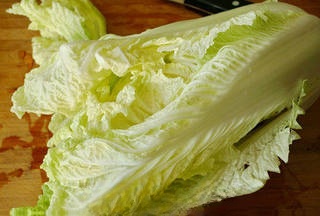
Korean kimchi~
Selection matters here: looser, thick-leaved heads with deep crinkles and pale yellow hearts beat firm cabbages for superior texture. Each leaf holds seasoning beautifully after salting.
Instructions
- 1
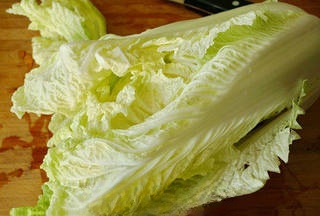
Usually, when choosing cabbage, we prefer the ones that are firm, but for making Korean kimchi, it's just the opposite: we remove the outer green leaves, and the inner leaves have deep walnut-like patterns (thick leaves) and display a charming pale yellow color. Even when selecting ingredients for cooking, you shouldn't be inflexible.
- 2
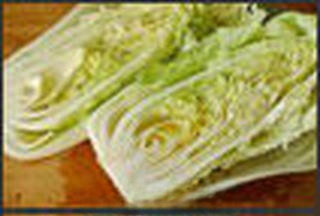
It became more obvious after cutting it open; it's not very tight, but each leaf is thick enough, split into four parts, otherwise you can roll it and show me.
- 3
If you have no grudge against the cabbage, don't break all the meridians; hold the cabbage from top to bottom in the position that feels most comfortable to you—yes, vertically. Rub it evenly with coarse salt; for each cabbage, use roughly 50 to 75 grams of salt. After a dozen hours or so... In workshop or industrial versions, they soak it in warm salty water, which is suitable for large-scale processing. If you are making 4 or 5 cabbages at home, you can also refer to the brine method—it's faster!
- 4
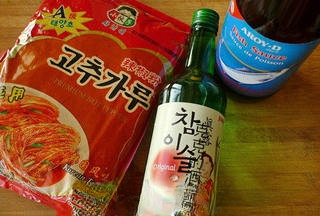
This chili powder is almost as fine as chili powder, fish sauce…
- 5
Rinse with clean water, then soak for an hour, repeat once, pinch a bit of the cabbage leaf to taste; there is a hint of saltiness, then drain.
- 6
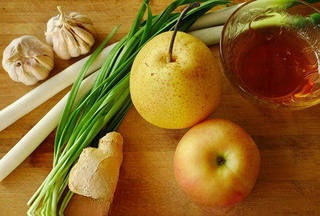
All utensils and hands must be free of grease, otherwise the kimchi will spoil!!! Without garlic, chives, and Korean pear, it's hard to tell others that what you made is Korean-style kimchi. Pear — Korean pear. Apple — Yellow-fleshed crisp sweet apple can also be used. Syrup — one part water, one part rock sugar, two parts malt syrup, two slices of ginger, boil and let cool.
- 7
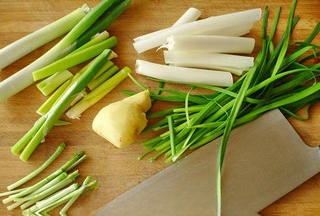
Use the white part of the scallion, not the green; use the green part of the chive, not the white; peel the ginger.
- 8
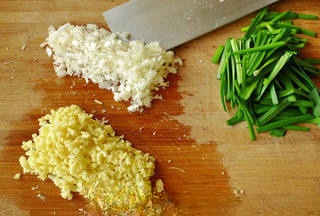
It's best to pinch the chives into one-and-a-half-inch sections by hand and rub them a bit. I didn't rub them because I wanted the photos to look good later. Finely chop the green onions and ginger. If you have time, you should squeeze out the juice using a garlic grinder. If you're too lazy to grind, just chop them finer than shown in the picture.
- 9
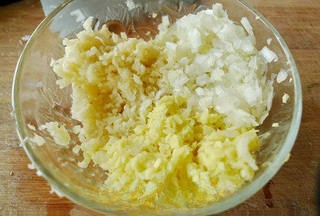
Garlic is directly crushed with a garlic press, and the ginger and white part of the scallion are mashed.
- 10
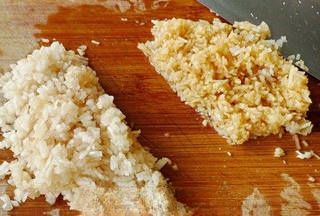
Half an apple and half a pear, chopped
- 11
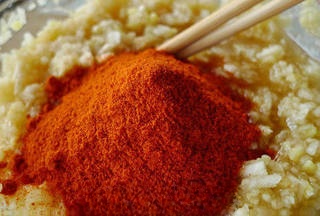
Fine chili powder, about 30 grams
- 12
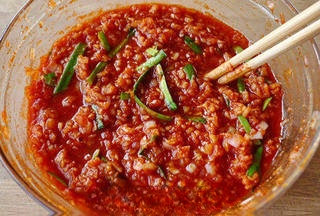
Mix all the ingredients, add 10 grams of fish sauce (contains a lot of salt), 30-50 grams of soju, then add 2.5 grams of refined salt, mix evenly and let it sit for a while, then stir evenly, and you can start the massage O(∩_∩)O~
- 13
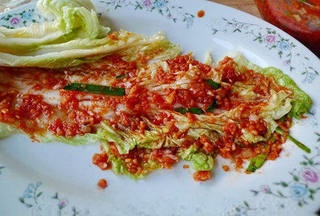
Finally, roll it up gently, control the strength, don’t squeeze out all the juice, and spread the seasoning while rolling.
- 14
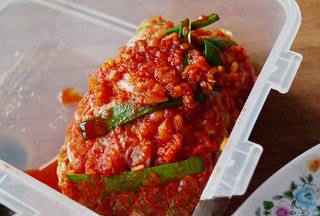
Lock & Lock food storage container
- 15
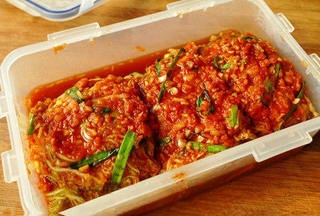
Store in the refrigerator (preferably not exceeding 5 degrees Celsius). It can be eaten after two weeks, works best after one month, and should not exceed three months.
- 16
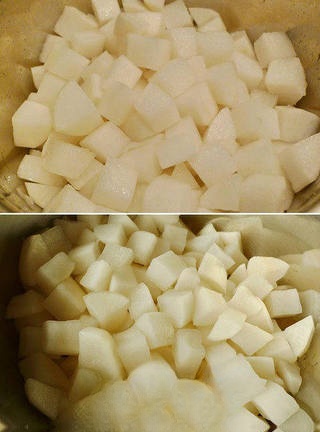
White radish (preferably peeled), prepared as before
- 17
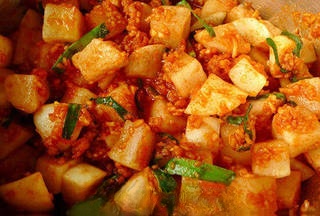
Mix well and it's ready.
- 18
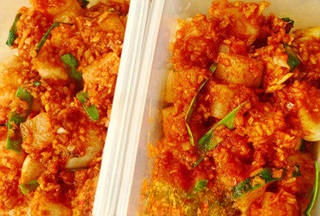
Place in the refrigerator. Can be eaten after two weeks.
Video Sharing
Share your cooking video with others
No videos yet. Be the first to share!
Discussion
Ingredients
Main Ingredients
- Chinese cabbageto taste
- Appleto taste
- Garlicto taste
- chivesto taste
- Pearto taste
- Gingerto taste
- fish sauceto taste
- sojuto taste
Auxiliary Ingredients
- fine chili powderto taste
- Scallionto taste
Seasonings
- rock sugarto taste
- Malt syrupto taste
- Refined saltto taste