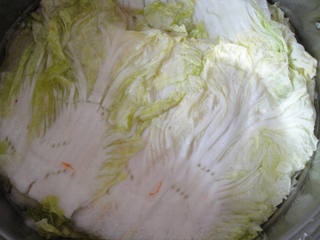
Lan's Spicy Kimchi
A household spicy cabbage recipe with a modern twist on tradition, washing the leaves thoroughly before salting to address concerns about pesticide residue.
Instructions
- 1
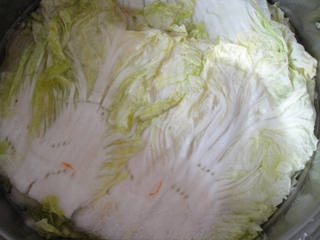
First, wash the purchased Chinese cabbage and carrots. You need to separate the cabbage leaf by leaf for washing. I forgot to take photos yesterday, so there are no pictures for this step. The traditional method is not to wash them first, but to wash them after blanching. Given the current serious pesticide residues, it’s better to wash them; otherwise, the blanching process would just push the pesticides into the cabbage. The second step is to spread a layer of cabbage, sprinkle a layer of salt, then spread another layer of cabbage and sprinkle salt again. To speed up the process, you can prick the cabbage stalks with a fork a few times. Here’s a detail I’ve summarized: place the most tender cabbage hearts at the bottom; they don’t need to be pricked because they’re very tender and absorb flavor easily. The older, wilted outer leaves should go in the middle layer and be pricked more times because the outer leaves lose water more, and the middle layer experiences the least pressure. Overall, place them in the middle. The layers that grow in the middle of a whole cabbage, neither losing water nor being too thin, should go on top, but prick them fewer times. After a while, a large basin of water will be placed on top, and this top layer will bear the most pressure directly. Arranging it this way maximizes the evenness of blanching for all the leaves so that none lose all their water while others barely change, which would be terrible. Place the carrot slices on top of the cabbage, then put a large basin filled with water on top to give the cabbage and carrots some pressure.
- 2
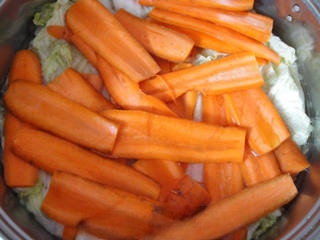
Supplementing the previous image, the carrot is on top, and the cabbage is on the bottom.
- 3
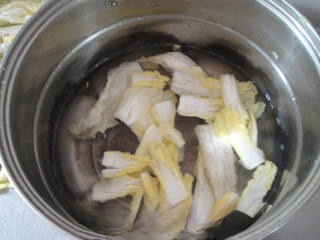
Do you see it? This is the water that has been boiled out over a day and a night; there's a lot. Next, rinse the cabbage with water once or twice, then take it out and drain for a few hours to prevent too much water from diluting the sauce and to avoid it spoiling easily.
- 4
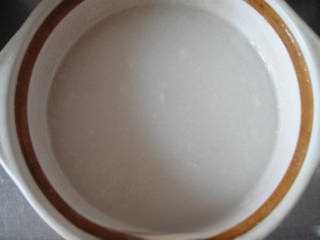
Prepare the seasoning mix, 1: Glutinous rice paste. The method is to boil a bowl of Sprite, add a spoonful of glutinous rice flour, stir well, bring to a boil again, then turn off the heat and let it cool, and it's ready.
- 5
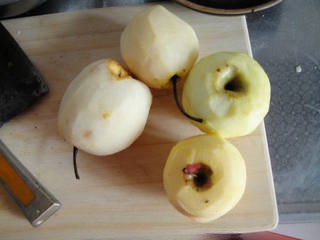
17 jin of cabbage, using two apples and two pears
- 6
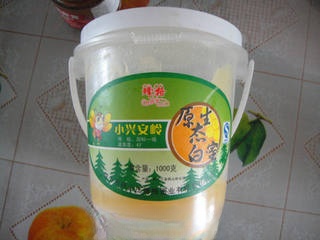
The authentic method is to use white sugar, but in my house, whenever honey can be used instead of white sugar, I go all the way with honey. Since I'm making it for myself, I don't worry about the cost and use 8 spoonfuls.
- 7
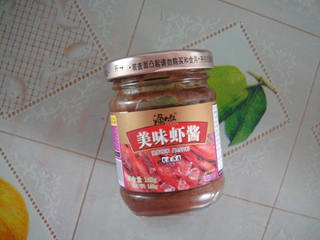
Essential ingredients, it should actually include fish sauce. I couldn't find it for sale around here, so let's just ignore it. Add 4 spoons if you like a bit, I'm not very fond of it, so I only put 4 spoons.
- 8
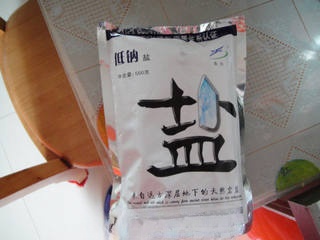
: Salt, including the pack used earlier for marinating the cabbage, the remainder will be mentioned during the process of making it.
- 9
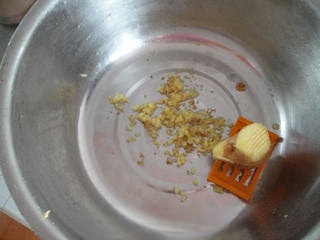
Remove the apples and pears from the pot, wash the ginger, peel the garlic, and grind everything into a paste.
- 10
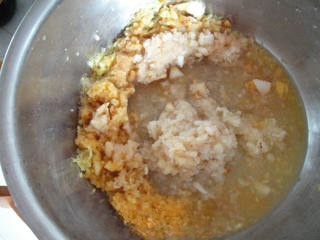
Fruit puree
- 11
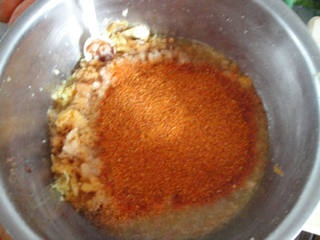
Add chili peppers. I specifically bought chili peppers that are not spicy, and it would be best to buy Korean chili powder. It is said to be not spicy at all and has no seeds. Actually, I really like eating chili seeds. Besides, there is no seedless chili powder available for purchase here, so we'll make do. Add about three or four taels.
- 12
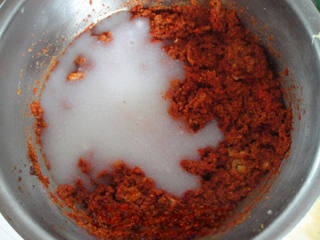
Add glutinous rice paste, about two bowls of thick chili sauce depend on him.
- 13
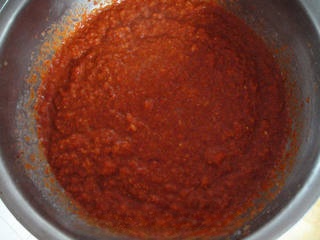
Harmonious chili sauce
- 14
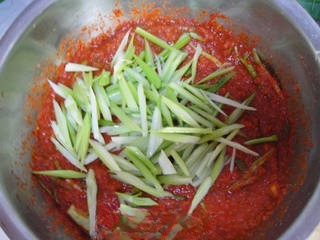
Add side dishes, cut the chives and celery into small pieces, the amount is up to you.
- 15
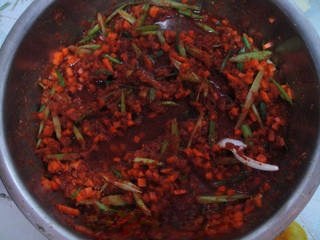
Then dice the carrots, add them in, and mix well.
- 16
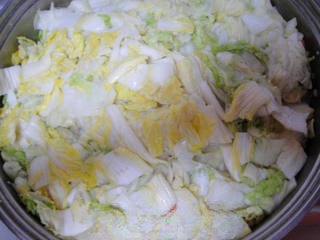
After the napa cabbage is well washed, cut it into bite-sized pieces. The traditional method is not to cut it, but I really don't want to make a mess everywhere every time I eat it, so let's cut it now.
- 17
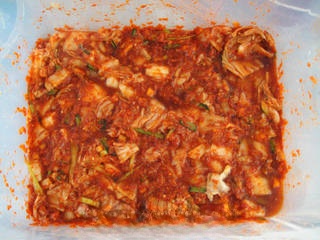
Only a few jin of cabbage. In the end, just mix the seasoning with the cabbage, and it's done.
- 18
Cover it with a lid. Given the weather right now, it can be moved to the fridge to eat anytime after a day and a night. PS: 1. Don’t worry that the shrimp paste will be too fishy; many ingredients remove the fishy taste. In fact, you can hardly taste the shrimp paste itself, but it will make it taste fresh. 2. Many ingredients don’t list exact amounts. Honestly, I don’t really know how much to add—just go with it. When you cook for yourself, add as much as you like. The trick if you’re unsure is to keep tasting. After cooking for more than ten years, you’ll develop a sense for it. Right now, I really can’t help you. 3. In short, our motto is not to aim for the most delicious, but to be the most reassuring. Haha. In the era when even youtiao has special additives, honestly, I don’t have the ability to make it taste better than restaurants. But hehe, cook happily and eat happily. Whether it tastes good or not, it’s all good, because you made it for yourself.
Video Sharing
Share your cooking video with others
No videos yet. Be the first to share!
Discussion
Ingredients
Main Ingredients
- Chinese cabbageto taste
- Celeryto taste
Auxiliary Ingredients
- chilito taste