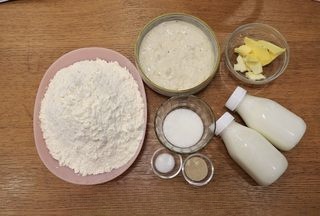
Polish Starter Yogurt Toast
A homemade recipe for Polish Starter Yogurt Toast, combining high-gluten flour, regular dry yeast and room temperature cold water; baked until golden and fragrant. A great choice for family gatherings or a weekend treat.
Instructions
- 1
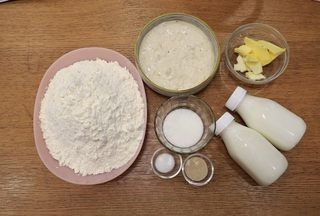
A group photo of the main dough ingredients and the Polish sponge starter.
- 2
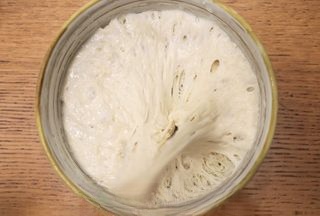
Polish starter needs to be prepared several hours in advance and fermented at room temperature; it can also be fermented at room temperature for 1 hour and then moved to the refrigerator for cold fermentation, with a refrigeration time of no more than 15 hours being preferable. The fermented starter should be 2-3 times its original size, the dough should be elastic, the bottom should have variously sized pores, and when lifted, it should stretch into long strands with a slightly sour taste.
- 3
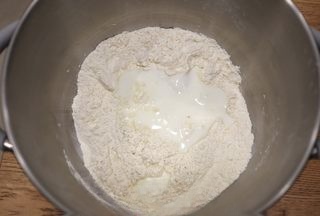
All ingredients except butter, including the Polish starter, are poured into the mixing bowl. The water absorption of the flour and the thickness of the yogurt are different, so the actual amount of yogurt used should be adjusted according to the situation. You can reserve 30 grams of yogurt and increase or decrease it as needed based on the dough's condition.
- 4
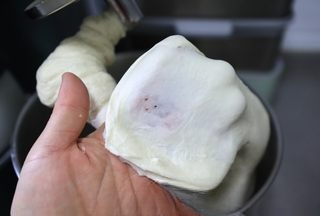
First mix at low speed for 2 minutes until it forms a dough, then switch to high speed to beat. The dough should be slightly sticky to the touch and able to stretch into a coarse membrane.
- 5
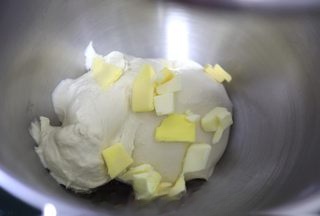
Add room-temperature softened butter, first mix at low speed to fully incorporate the butter into the dough, then switch to high speed.
- 6
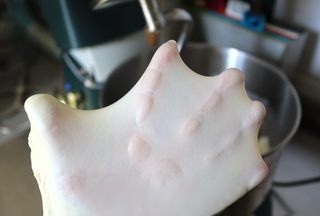
The dough does not stick to the bowl, and makes a slapping sound when struck. The entire dough falls like silk, and when you pull a piece of dough, it can stretch into a thin, transparent, elastic film.
- 7
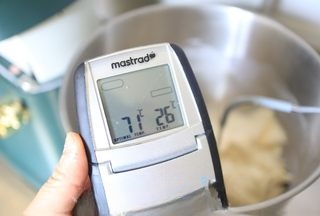
Test the dough; it's just at 26 degrees.
- 8
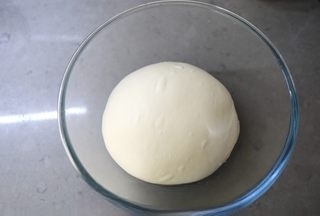
Shape the dough into a ball and place it in a bowl, cover it with plastic wrap, and let it undergo primary fermentation in a warm and humid place; my current room temperature is 25 degrees, so I am fermenting it directly in the dining room.
- 9
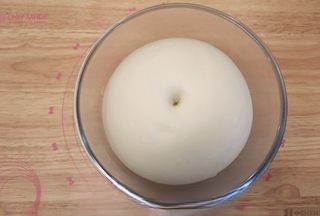
The dough is twice its original size. Dip your finger in flour and poke a hole in the top of the dough; it does not collapse or shrink back.
- 10
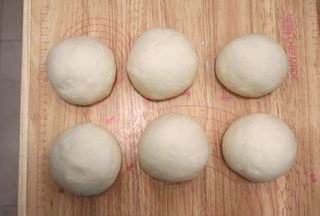
Pour the dough onto the workbench, gently tap to release air, weigh and divide into 6 equal portions, and shape each into a round ball; since this dough has a higher water content, you can dust a little flour on your hands to prevent it from sticking to the board; cover with a bowl and let it rest for about 20 minutes; press the dough with your finger, and if the indentation does not bounce back, the dough has rested sufficiently.
- 11
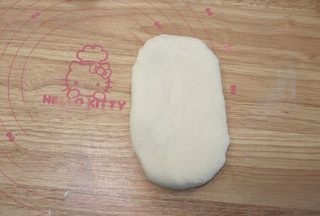
Gently pat the dough a few times, then roll it into a shape like a cow's tongue.
- 12
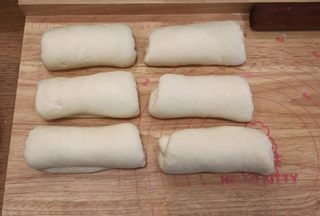
Roll it two rounds, let it relax for about 15 minutes, and press the dough with your fingers; if the indent does not spring back, the relaxation is complete.
- 13
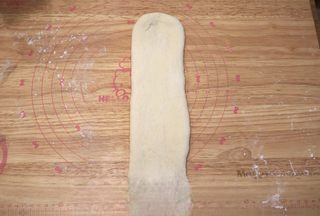
Place the dough upright, first roll it into a long strip with the smooth side facing up, then flip it over and roll it again.
- 14
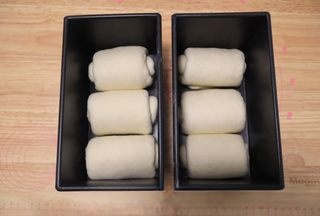
Roll it up from top to bottom and place it into a 450-gram loaf pan; let it undergo a second fermentation in a warm and humid place; I put it in the oven, sprayed some water to increase humidity, set the temperature to 35°C, and fermented for 1 hour.
- 15
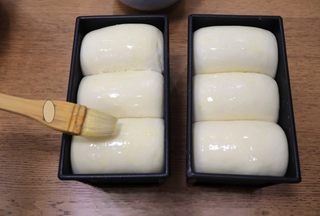
My toast dough weighs about 540 grams, so let the dough rise until it is 90% full, and brush a layer of egg wash on the surface; preheat the oven with top and bottom heat to 180/200 degrees. If you cannot control the temperatures separately, preheat to 200 degrees.
- 16
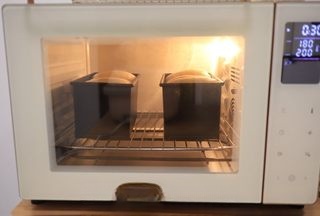
Place the raw dough into the preheated oven on the lower rack, bake with top and bottom heat at 180/200°C for 30 minutes. Once the surface has achieved a satisfactory color, you can cover it with aluminum foil; if you cannot control the temperature separately, bake at 190°C with both top and bottom heat.
- 17
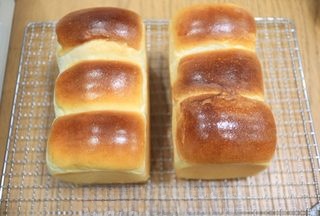
Once the bread is baked, take it out of the oven immediately, lift the loaf pan and tap it on the table a few times to release excess heat, unmold it immediately, let it cool on a rack until it reaches hand temperature, then store it sealed. It can be sliced or pulled apart by hand.
- 18
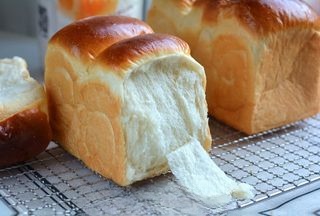
Polish starter yogurt toast, soft and stringy slice by slice!
Video Sharing
Share your cooking video with others
No videos yet. Be the first to share!
Discussion
Ingredients
Main Ingredients
- High-gluten flour60g (Mobao toast flour)
- Regular dry yeast0.6 g
- room temperature cold water60 g
- High-gluten flour500g (toast flour)
Seasonings
- High sugar tolerant dry yeast5 g
- Salt5 g
- Granulated sugar20 g
- Yogurt with sugar and original flavor400 g
- unsalted butter40 g